New and upgraded three-phase supplies
Assessing what the site has, what it needs, and the works required within the customer's electrical installation to accept a larger supply.
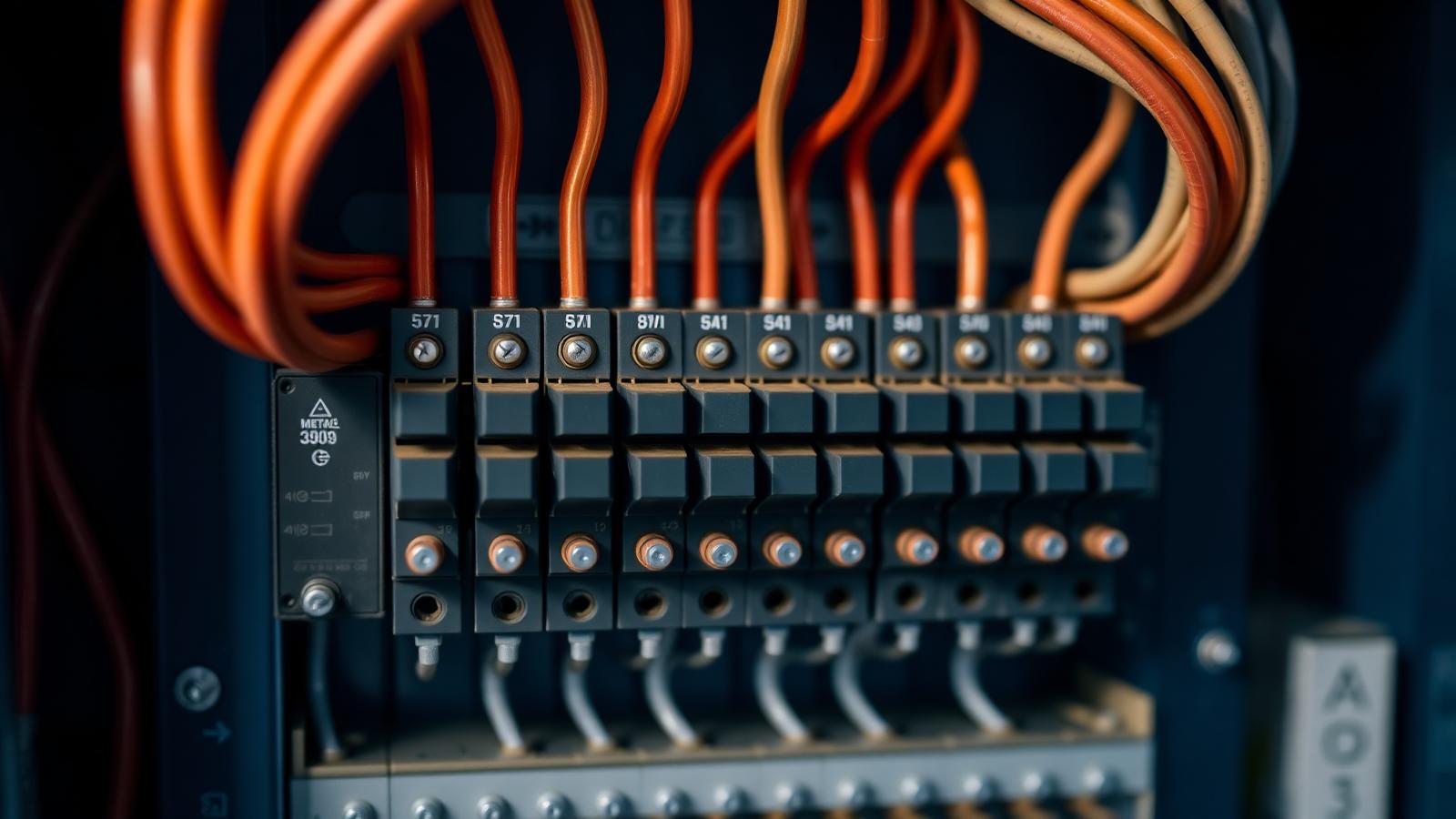
Three-Phase Power
Three-phase power is commonly used at commercial and industrial sites where electrical demand exceeds the practical capacity of a single-phase supply. It can provide greater electrical capacity and is commonly used for equipment such as machinery, large air-conditioning plant, commercial catering equipment, lifts, compressors and higher-powered EV charging installations.
Projects in this area are usually about capacity: either a site has three-phase and needs it distributed further, or it does not and needs to find out what is involved in getting it. GridGuys is a matching platform, so we pass those enquiries to contractors who work on supply and distribution projects.
Scope
Three-phase projects tend to sit somewhere between the incoming supply and the equipment it feeds.
Assessing what the site has, what it needs, and the works required within the customer's electrical installation to accept a larger supply.
Three-phase distribution boards, sub-mains to remote areas, mezzanines and outbuildings, and correctly rated protection throughout.
Reviewing existing demand, spreading loads evenly across the three phases and identifying where an unbalanced installation is causing problems.
Final connections and isolators for machinery, chillers, compressors, ovens, lifts, pumps and other three-phase plant.
Main switch panels, isolation arrangements, sub-metering and space planning for future circuits.
Capacity headroom for electrification projects such as EV charging, heat pumps or additional production equipment.
Practicalities
These are the points that most often shape the programme, the method and the price on this type of project.
The current supply rating, main fuse size and whether the incomer is single or three-phase are the first questions. A photo of the intake position usually answers most of them.
Where the incoming supply itself has to change, the works involve the regional distribution network operator as well as the electrical contractor. Their process and charges sit outside the contractor's own quotation.
Equipment nameplate ratings, or a list of what will run at the same time, allow a contractor to size cables and protection properly rather than guessing.
Cable routes across a site — through ceilings, across yards or underground — often drive the cost more than the board work at either end.
Where it applies
Any site adding significant load is a candidate; these are common examples.
Related work
A capacity project usually touches several other areas of the installation.
Where three-phase supplies most often arise, and how works are planned around production.
Charging schemes are a common reason a site looks at its supply arrangement and available capacity.
Machinery, control panels and process power that a three-phase supply exists to serve.
Production-floor distribution and new line supplies fed from upgraded three-phase capacity.
Large-floorplate distribution, high-bay lighting and racking power across storage buildings.
Condition reporting on the existing installation before deciding what can safely be extended.
See the full range on our commercial electrical services hub.
You do not need all of this to submit an enquiry, but the more you can include, the more accurately a contractor can respond.
How GridGuys works
GridGuys does not carry out electrical work. We take your enquiry, review what is needed and introduce you to an electrical contractor working in that category. From the introduction onwards, the contractor deals with you directly.
Give the site details, the works required and anything you already have such as drawings or photos.
We look at the scope, location and timeframe so the enquiry goes to a contractor set up for that work.
We connect you with an electrical contractor whose capabilities match what you have described.
The contractor prices the works and deals with you directly from that point onwards.
FAQs
Tell us what you need to power and what supply the site has today. A photo of the intake position and equipment ratings help a contractor respond accurately.