Office and workplace managers
Responsible for the working environment day to day, dealing with lighting, small power, desk changes and anything that stops people working.
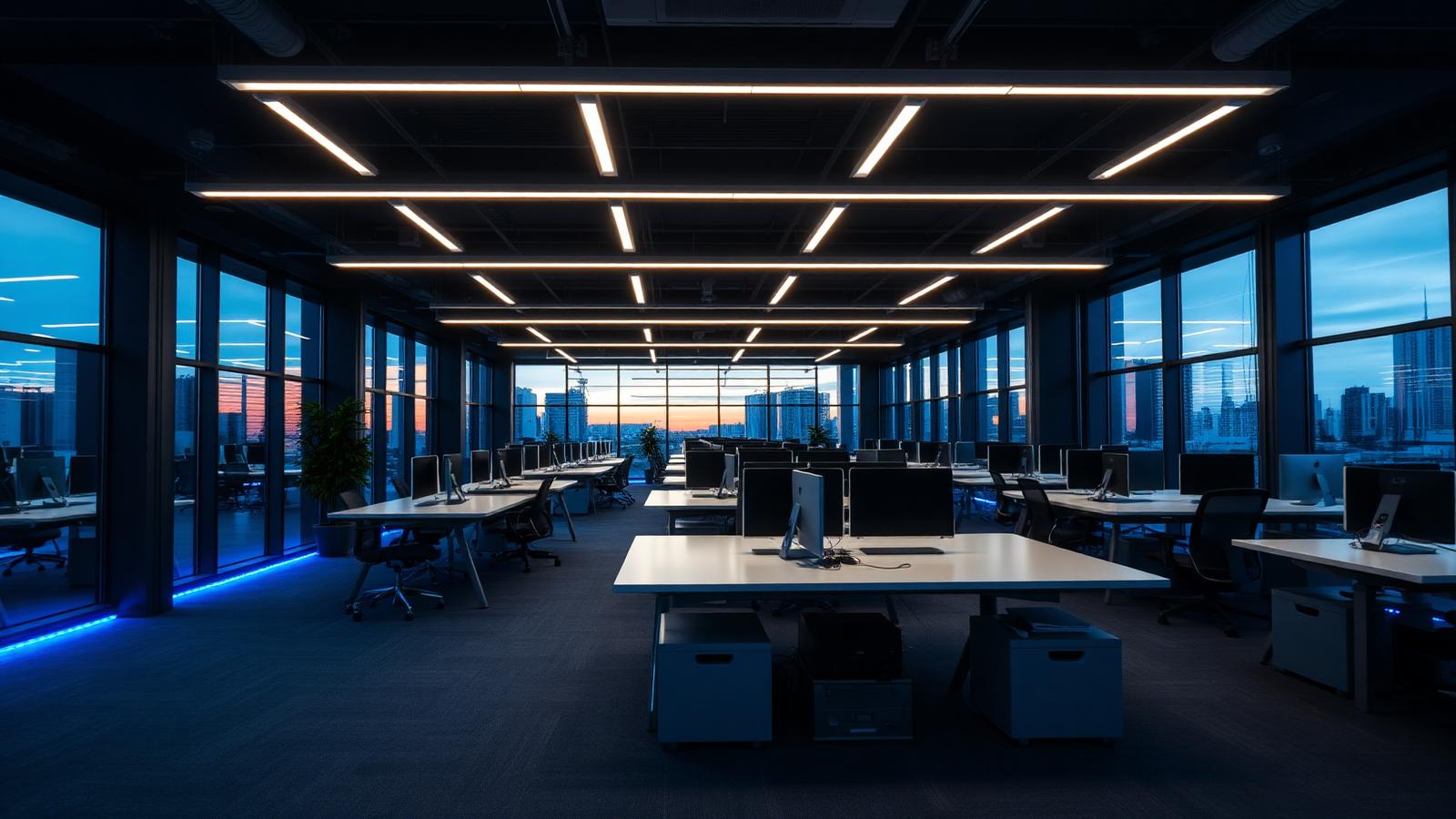
Sector — Offices & Commercial Buildings
Office electrical work is defined by the people in the building. The technical scope is often straightforward; the difficulty is completing it without taking desks, meeting rooms or a floor out of use during the working day.
GridGuys is a commercial electrical lead-connect platform. We do not carry out the work. We take your description of the building and the works and pass it to a contractor who is used to working in occupied commercial premises.
Who it is for
Office enquiries come from occupiers, from the people who run the building, and from the people fitting it out.
Responsible for the working environment day to day, dealing with lighting, small power, desk changes and anything that stops people working.
Looking after landlord areas, risers, plant supplies and the testing regime across a building or business park.
Taking, changing or improving space and needing the electrical element priced alongside the rest of the works.
Delivering a refurbishment or category fit-out and needing an electrical contractor for the installation element.
Requirements
Most office scopes fall into upkeep, compliance, change of layout or an improvement to the building.
Replacement luminaires, layout changes after a churn, control and sensor adjustments and emergency lighting attendance.
Commercial electriciansFloor boxes, busbar tap-offs, desk power, additional sockets and alterations following a move or reconfiguration.
Commercial electrical servicesPeriodic inspection phased floor by floor or board by board, usually with some elements taken out of hours to limit disruption.
Commercial EICR testingA recurring visit covering distribution, lighting, emergency lighting and the small defects that accumulate in a busy building.
Electrical maintenanceDistribution for new layouts, meeting room and AV power, kitchen and tea point supplies, and reinstatement at lease end.
Commercial fit-out worksCharging points in staff and visitor parking, including how the supply is taken and how future additional points are allowed for.
Commercial EV chargingHow the work arises
Offices generate a steady stream of small works alongside occasional larger projects, and the two are quoted very differently.
Recurring or small-scale work that keeps the building comfortable and compliant, usually delivered in short visits.
Larger, dated pieces of work usually tied to a lease event, a headcount change or a building improvement.
Scale
Business parks and multi-let buildings add coordination requirements on top of the electrical scope.
Drilling, cable pulling and ceiling access are rarely acceptable during business hours. Say which activities can be daytime and which cannot.
Breaking a scope into floors or zones keeps parts of the building working and usually makes the programme more predictable.
Work that touches risers, landlord boards or plant areas normally needs landlord or agent permission before it can proceed.
Where a business occupies more than one building, describe each separately — access rules and installation age often differ.
The GridGuys process
GridGuys is not the electrical contractor. We pass a described requirement to a firm that works in occupied commercial buildings.
You describe the building, the floor or area, the works and the hours available.
We review the scope, location and whether the work is occupied-hours or out-of-hours.
We pass the enquiry to an electrical contractor suited to that type of building.
The contractor arranges any survey, provides the quotation and carries out the work.
Related
Office enquiries often sit alongside these areas.
Where an FM team or provider holds the maintenance and compliance responsibility for the building.
Landlord-side works in multi-let offices, common parts and shared plant areas.
General commercial installation, alteration and repair work in business premises.
Workplace charging in staff and visitor car parks, including supply and expansion considerations.
See every service on our commercial electrical services hub, or browse all commercial sectors.
FAQs
Tell us about the building, the works and the hours available, and GridGuys will pass it to a contractor experienced in occupied commercial premises.
GridGuys connects commercial electrical enquiries with contractors. We do not carry out electrical work ourselves.