Site and operations managers
Accountable for throughput and shift patterns, needing works planned around production windows rather than the other way round.
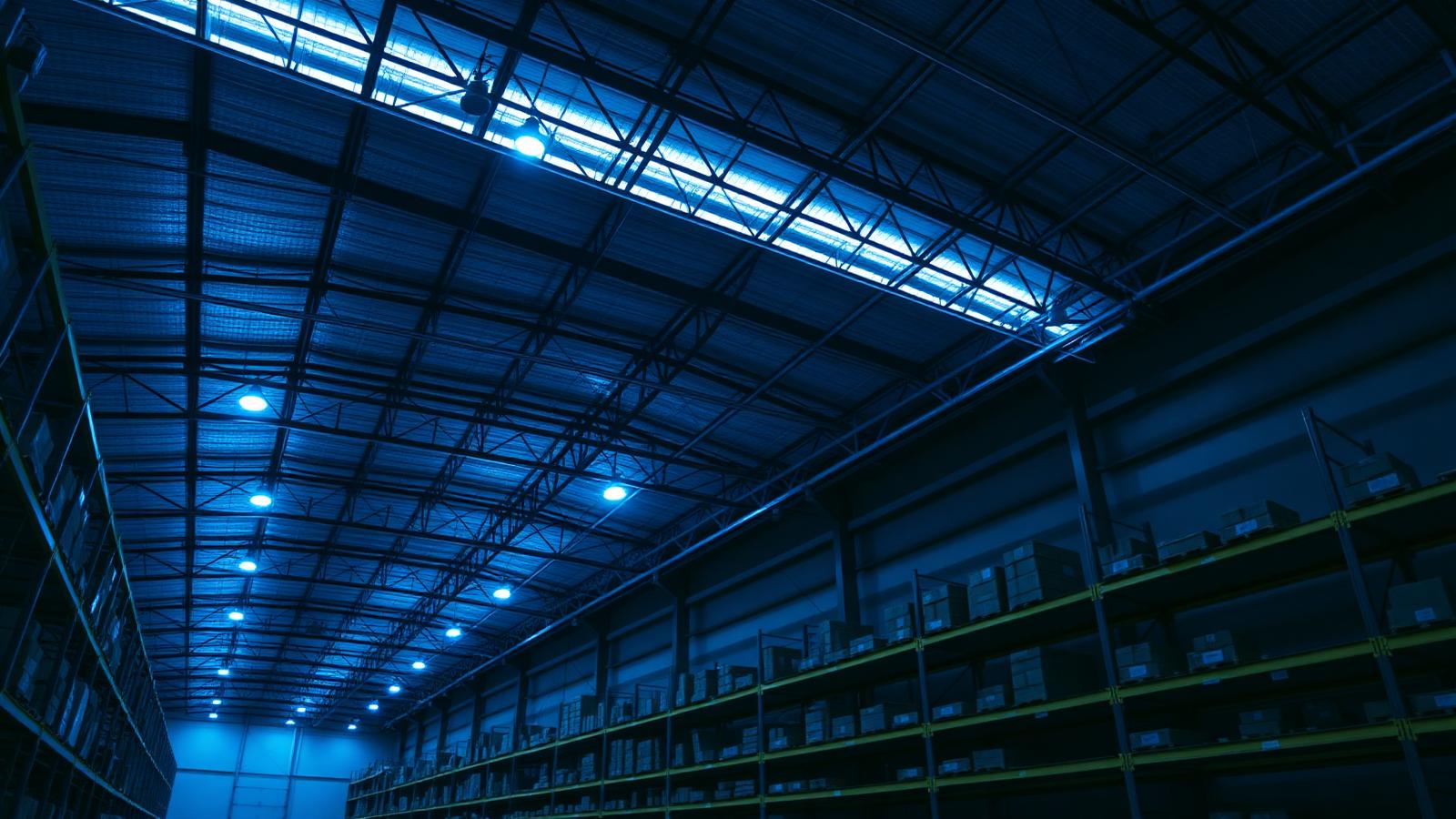
Sector — Warehouses & Industrial
In warehousing and industrial premises, electrical work is judged first on whether it interrupts operations. A shift that cannot run, a line that cannot start or a chamber that loses power carries a cost that usually dwarfs the works themselves.
GridGuys is a lead-connect platform for commercial and industrial electrical enquiries. We do not carry out installation, maintenance or testing. We route a described requirement to a contractor who works in this type of environment.
Who it is for
Industrial electrical decisions usually involve production, engineering and site leadership at the same time.
Accountable for throughput and shift patterns, needing works planned around production windows rather than the other way round.
Holding the asset list and the fault history, and dealing with distribution, machine supplies and standby arrangements.
Running high-bay warehousing, chilled space, conveyors, MHE charging and yard infrastructure across one or many depots.
Introducing, moving or upgrading plant where supply capacity, isolation and control all have to be considered together.
Requirements
Industrial scopes tend to be heavier, involve three-phase distribution and often have to be executed inside a fixed window.
New machine supplies, isolators, local distribution and alterations when equipment is installed, relocated or replaced.
Three-phase installationBoard replacements, sub-main extensions and reconfiguration where the existing distribution no longer matches how the site is laid out.
Infrastructure and switchgearContainment, power distribution, control wiring and general industrial electrical works within production and storage areas.
Industrial electriciansHigh bay lighting, aisle and racking-driven layouts, external and yard lighting, and changes following a racking reconfiguration.
Warehouse electriciansPeriodic inspection phased by area or by board so that testing can be completed without stopping the whole operation at once.
Commercial EICR testingA recurring visit pattern covering boards, lighting and known problem areas, plus a route for faults arising between visits.
Electrical maintenanceHow the work arises
The single biggest factor in an industrial electrical price is when the work can be done and what has to stay energised while it happens.
Scopes tied to a defined window: a shutdown, a holiday period, a night shift or a scheduled changeover. Programme certainty matters more than anything else.
Work carried out while the site continues to operate, where isolation, segregation and access control shape the method.
Scale
Operators running several depots or plants usually want consistency without pretending the sites are identical.
Racking layouts, chilled areas, working-at-height requirements and shift patterns differ by depot and directly affect method and duration.
A single written scope applied across the network makes quotations comparable and makes it obvious where a site needs something extra.
Grouping depots geographically usually produces a more realistic programme than expecting one contractor to cover the whole network at once.
Agree what certification, test results and asset data are returned, and in what format, so the records are usable across the estate.
The GridGuys process
GridGuys does not carry out electrical work. We take the requirement and pass it to a contractor who operates in industrial environments.
You describe the site, the operation and the electrical requirement, including any shutdown window.
We review the scale, location and the type of environment involved.
We pass the enquiry to a contractor working on industrial and warehouse installations.
The contractor arranges any survey, prices the works and deals with you directly.
Related
Industrial enquiries commonly touch these areas as well.
Where an FM function rather than an engineering team holds the maintenance and compliance duty.
Attached office accommodation, gatehouses and welfare areas on an industrial site.
Production-focused electrical work, machine supplies and plant environments.
Standby and supported supplies where an interruption has a direct operational cost.
See every service on our commercial electrical services hub, or browse all commercial sectors.
FAQs
Describe the site, the works and any shutdown window, and GridGuys will pass it to a contractor working in industrial and warehouse environments.
GridGuys connects commercial electrical enquiries with contractors. We do not carry out electrical work ourselves.