Main and sub-main distribution
Cabling from the intake position to distribution equipment around a building or site, additional sub-mains for extensions, mezzanines and separate units, and re-routing where a building layout changes.
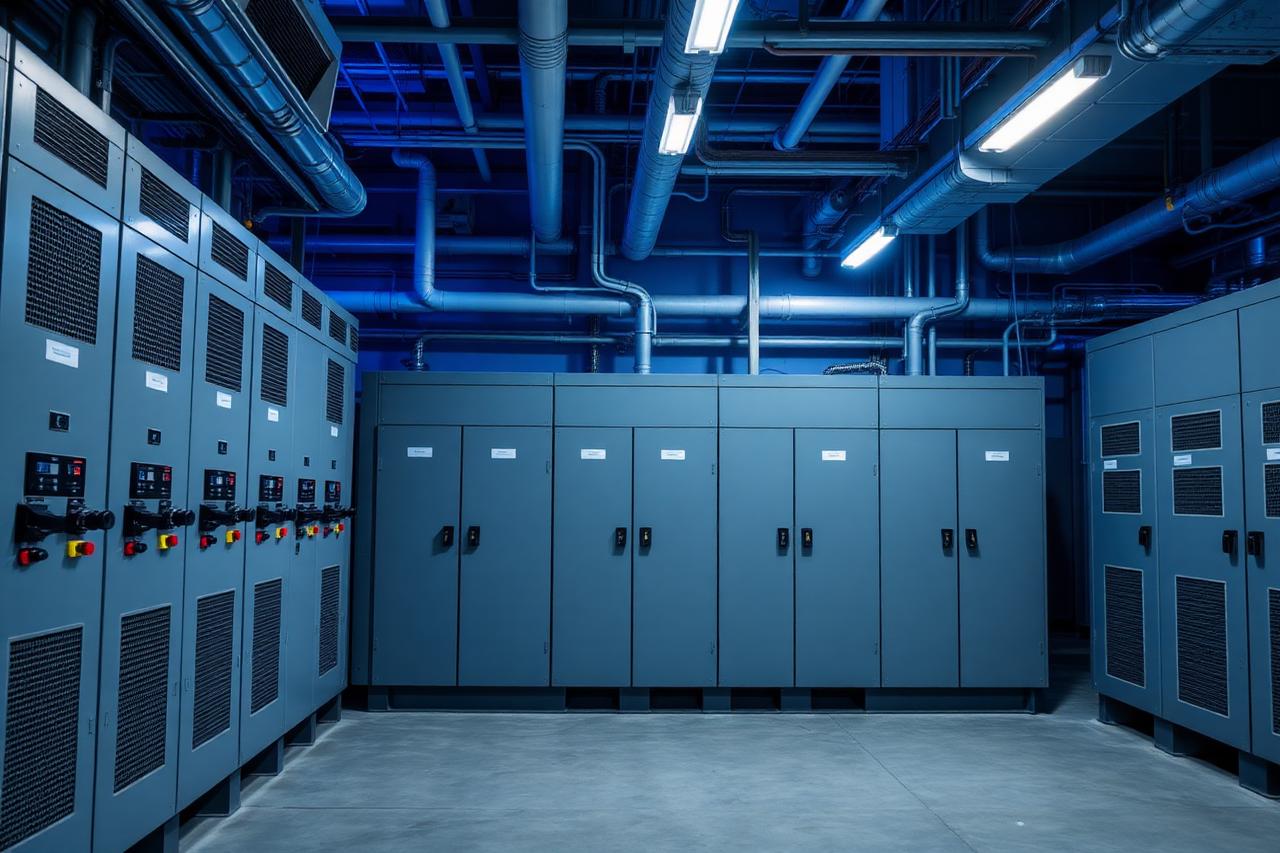
Infrastructure & Switchgear
Infrastructure work sits behind the final circuits. It is the distribution that carries power from the intake position out across a building or a site: main and sub-main cabling, switchgear and panels, distribution boards serving separate areas, and the alterations that follow when a site's load or layout changes.
These projects are usually driven by capacity, condition or reconfiguration rather than by a fault, and they tend to involve shutdown planning, phasing and coordination with whoever operates the site. GridGuys does not carry out this work. We take the details of the requirement and pass it to an electrical contractor working at that level, who assesses the position and prices accordingly.
Scope
Requirements described in general terms are welcome. Exact scope on infrastructure work is normally settled after a contractor has seen the existing arrangement.
Cabling from the intake position to distribution equipment around a building or site, additional sub-mains for extensions, mezzanines and separate units, and re-routing where a building layout changes.
Replacement or extension of low-voltage switchgear and panels, additional ways, changes to protection arrangements, and works associated with equipment that has reached the end of its serviceable life.
New, replaced or relocated boards, changes to board schedules, segregation of loads, and rationalising installations that have been extended piecemeal over many years.
Works arising where a site's electrical demand changes — new plant, additional production, charging, cooling or a change of use — and the existing distribution needs reviewing against it.
Splitting or combining supplies between areas or tenancies, sub-metering arrangements, and altering distribution to follow a new layout.
Remedial and replacement work identified by inspection or by problems in service, where the concern is the distribution equipment itself rather than the circuits it feeds.
Practicalities
These are the points that most often shape the programme, the method and the price on this type of project.
Distribution equipment installed decades ago can become difficult to obtain parts for, which pushes an operator towards planned replacement rather than repair.
Added plant, process equipment, cooling or charging increases demand on distribution that was sized for an earlier use of the premises.
Subdividing a building, adding tenancies or converting space usually means distribution has to be reorganised rather than simply extended.
Periodic inspection or a survey can identify distribution equipment or main cabling as the underlying issue, which moves the work into this category.
Where it applies
Infrastructure requirements are most common on larger premises, multi-building sites and buildings with a long service history.
Related work
Infrastructure work usually connects to other categories, either as the cause or as the consequence.
Infrastructure changes seen from the FM and estates side of a building.
Supply arrangements, sub-mains and load distribution are frequently the starting point for an infrastructure enquiry.
Plant, machinery and process power are often what the distribution is being changed to support.
Where continuity of supply matters, resilience arrangements are considered alongside the distribution itself.
Condition reports commonly identify distribution equipment as the reason for recommended remedial work.
See the full range on our commercial electrical services hub.
You do not need all of this to submit an enquiry, but the more you can include, the more accurately a contractor can respond.
How GridGuys works
GridGuys does not carry out electrical work. We take your enquiry, review what is needed and introduce you to an electrical contractor working in that category. From the introduction onwards, the contractor deals with you directly.
Give the site details, the works required and anything you already have such as drawings or photos.
We look at the scope, location and timeframe so the enquiry goes to a contractor set up for that work.
We connect you with an electrical contractor whose capabilities match what you have described.
The contractor prices the works and deals with you directly from that point onwards.
FAQs
Tell us what has prompted the requirement and what you know about the existing distribution. Your enquiry is passed to a contractor working on commercial and industrial infrastructure.